1 item added to cart







Factory visit at Astorflex: Father, son, and the family legacy
For over 200 years, Astorflex has been making shoes in the small Italian town of Castel d’Ario, just outside Mantova. We visit the Astorflex factory to meet father and son, Fabio and Giulio Travenzoli, and learn about a family heritage where traditional craftsmanship meets new ideas and a belief in the future.
Photo: Selma Lindquist
Text: Camilla Åsedal
Video: Leo Prim
A Heritage from 1820
On the factory floor at Astorflex, two generations of Travenzoli work side by side. It is not uncommon to find the company’s owners with their hands in the shoe-making process, rather than behind a desk. For Fabio and Giulio Travenzoli, the hands-on work is a natural part of everyday life, just as it has been for the generations before them.
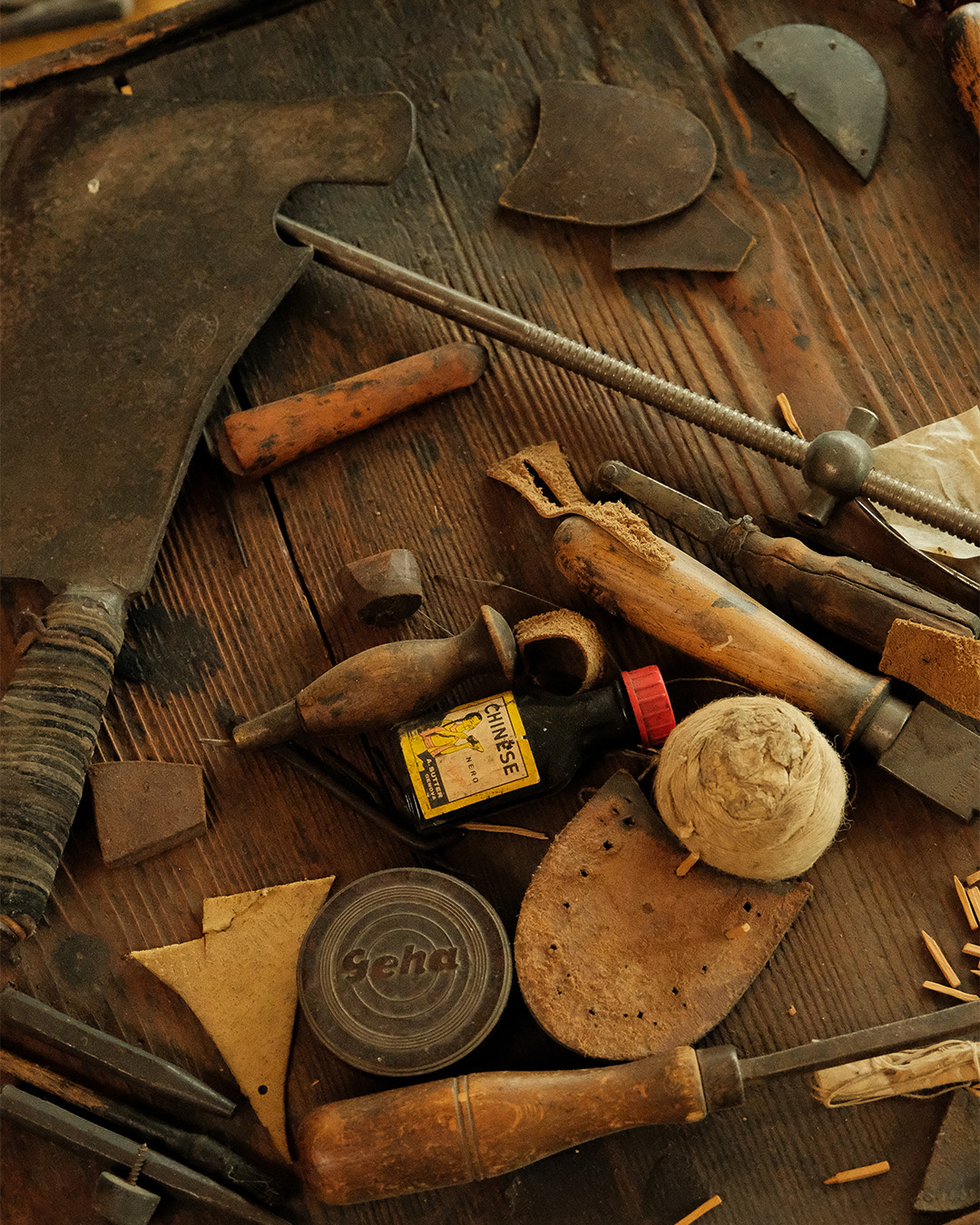
Together with Franco Vivaldi, who is responsible for the company's commercial operations, they show us around the factory. About fifty people work here, where the shoes take shape through everything from cutting and sewing to assembly. Much of the work is still done by hand, in a production where traditional methods coexist with modern technology.
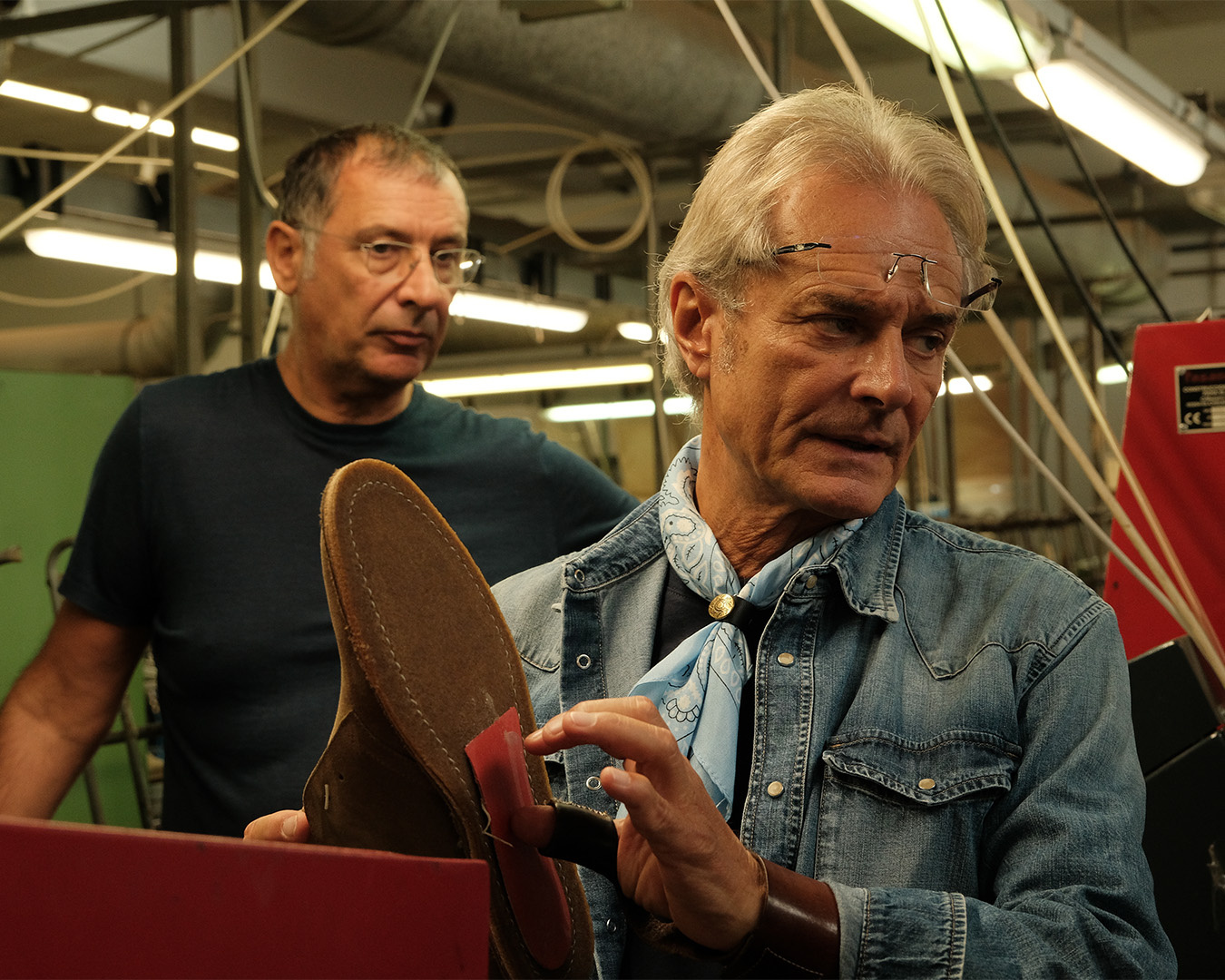
Fabio Travenzoli and Franco Vivaldi take us on a tour of the factory.
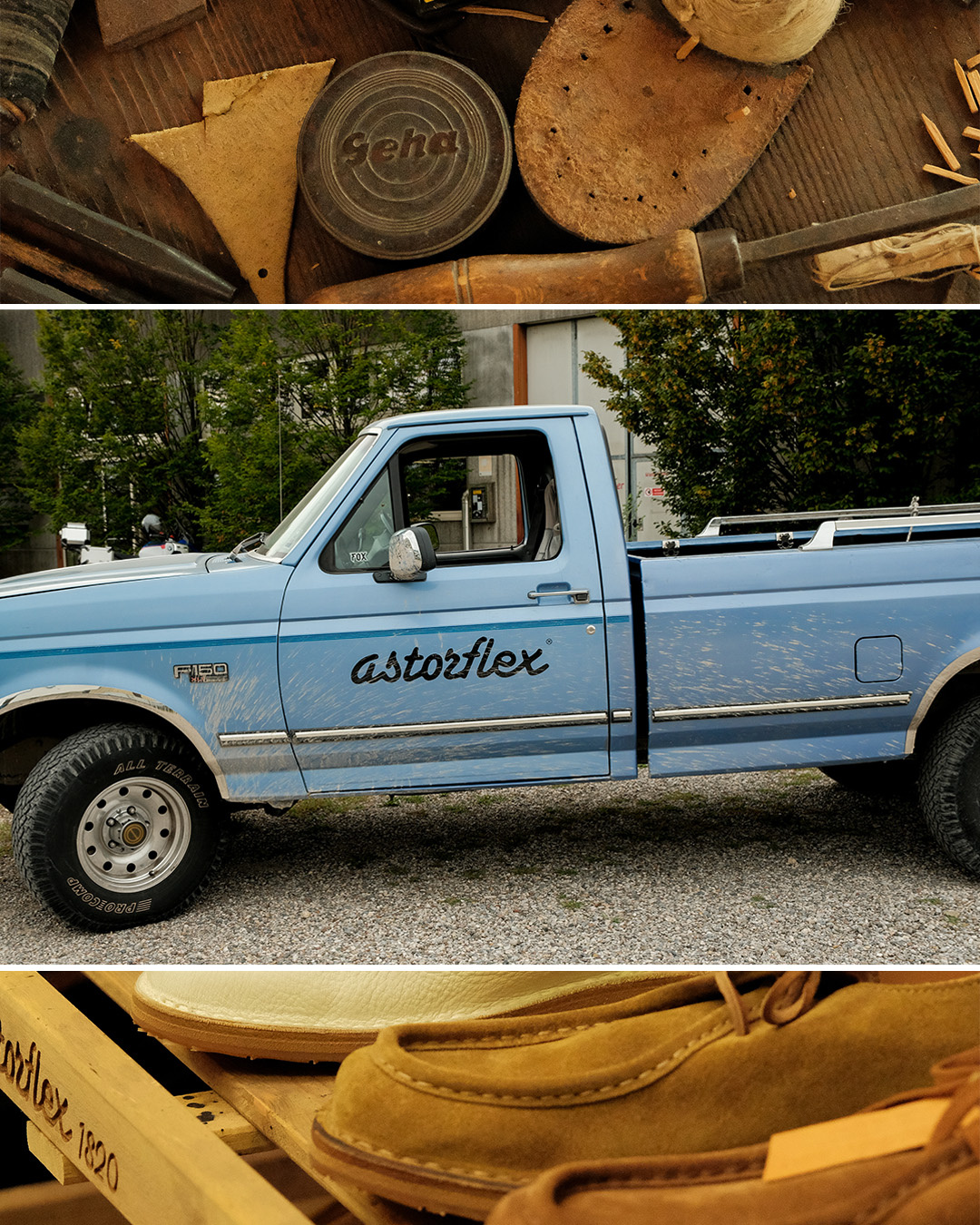
Astorflex's history dates back to 1820. Initially, simple and affordable work shoes were made for people in the Italian countryside.
Astorflex's history dates back to 1820. Initially, simple and affordable work shoes were made for people in the Italian countryside.
Fabio began working alongside his father Alfredo in 1986 and took over the business when his father passed away two years later.
– When my dad passed away, the company had five or six employees. Today, we have around 50 people working here. It’s a great responsibility to carry this story forward. At the same time, we should be proud to have transformed a small business into an operation that, while still small, competes in an international market.
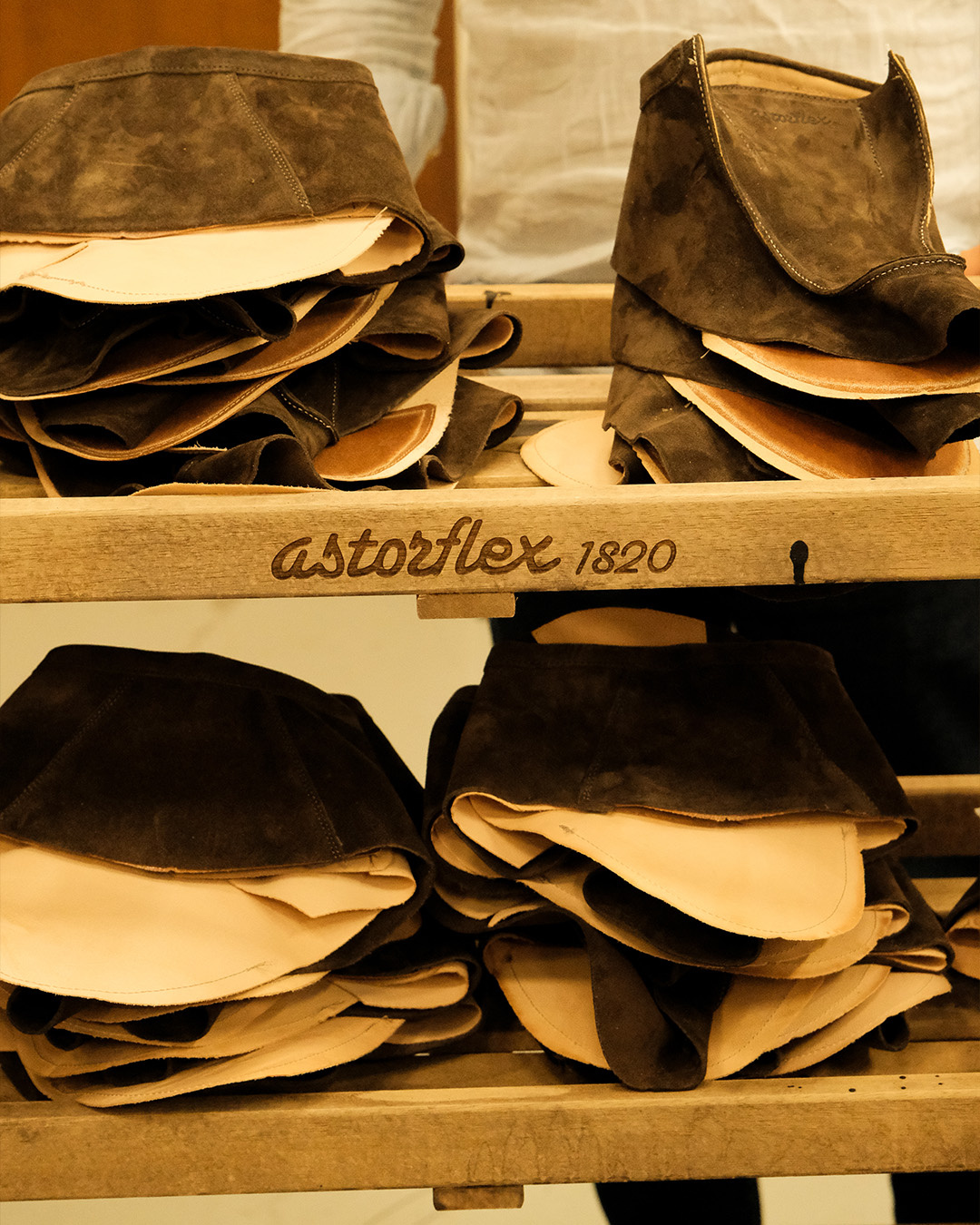
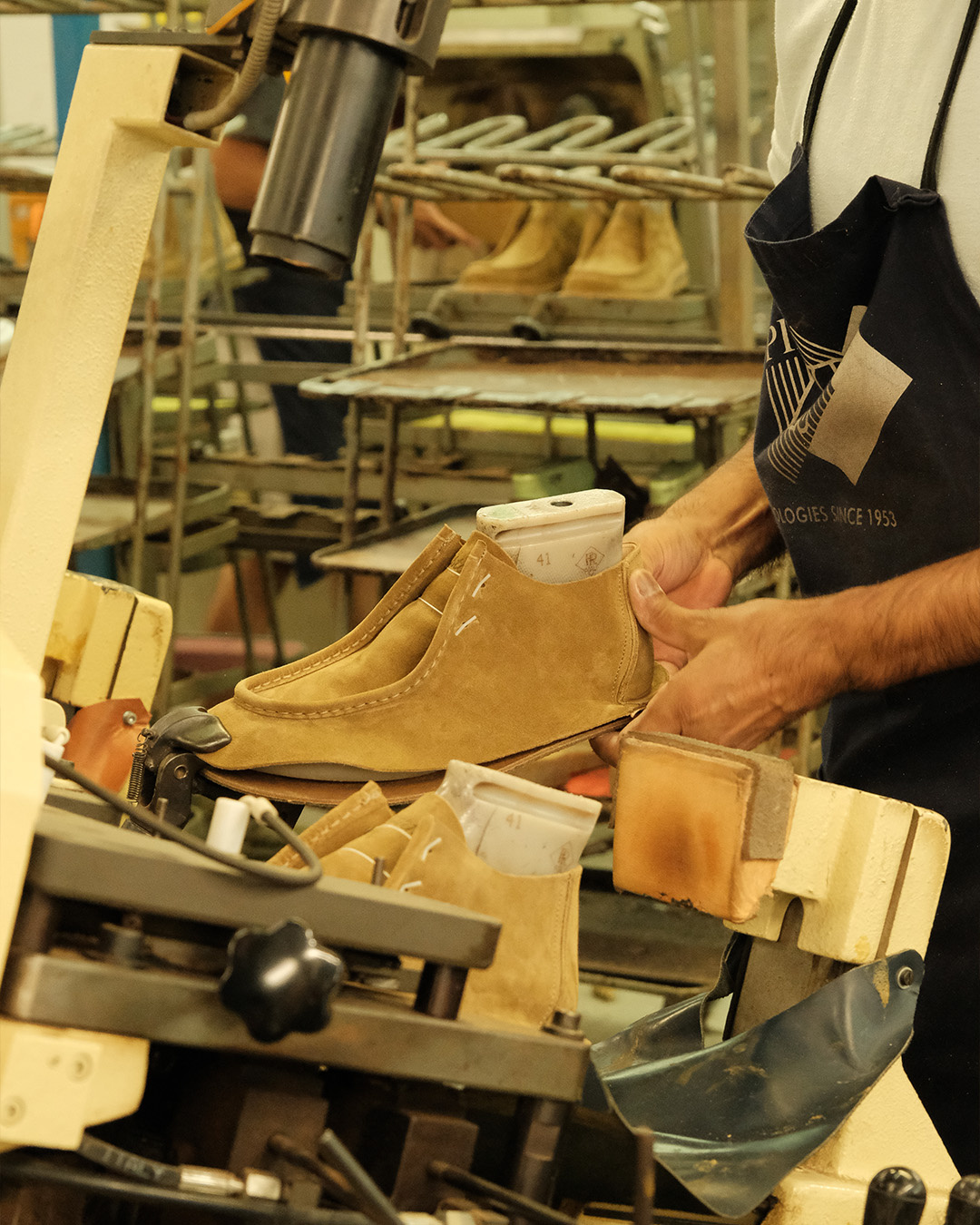
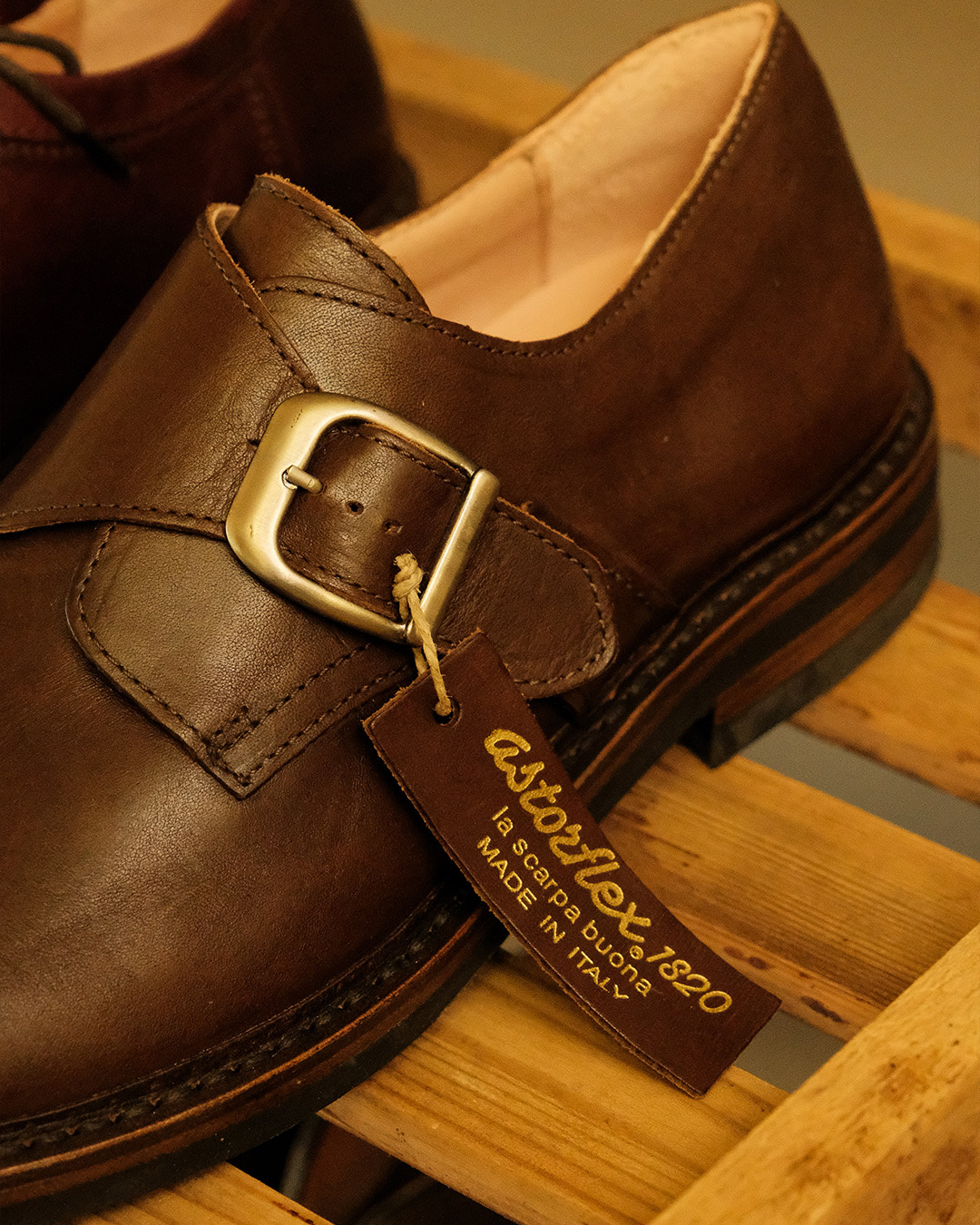
A central part of the production is the so-called Ideal construction, where a visible seam runs around the shoe, a technique that Fabio has inherited from his father. The shoes are still made in small batches, with great control over each step of the process.
Two generations, two perspectives
Working together as father and son means merging different experiences, but also different perspectives on the business.
– I’m a factory person. I go out to the factory, get my hands dirty, and can make a shoe from start to finish, says Fabio.
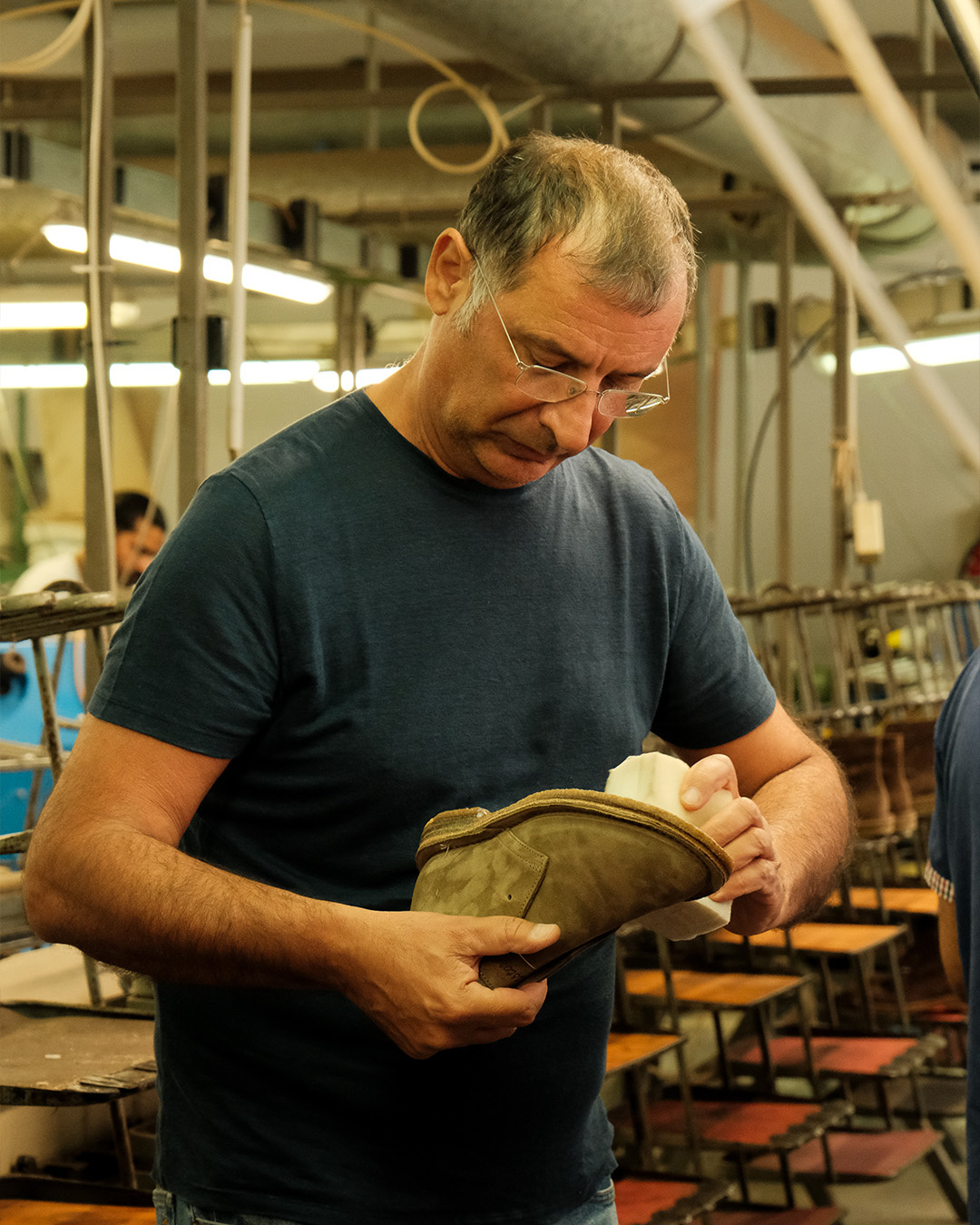
Son Giulio has, in turn, taken on an increasingly larger responsibility for administration, digital systems, and company management. But his entry into the business has meant more than just a much-needed relief.
What is the best part of working with your son?
– Until a few years ago, I didn’t have a very bright outlook for the future, says Fabio. Work had begun to feel heavy, but when my son came into the business, it brought joy. Since then, things have gone very well, largely thanks to my son and the future we can now see for the company.
– And the negative? Giulio interjects.
– There’s nothing negative.
– Nothing?
– Sure, we have a few minor disagreements, but those are just small matters. I’m happy. And proud.
However, they are not always completely in agreement on how work should be conducted. Son Giulio takes the opportunity to give his father a friendly jab about their different working styles:
– The negative about you is perhaps that you have too much creativity. You tend to move on to the next thing before what we’ve already done has really settled.
Fabio defends his constant desire to create something new:
– I’m driven by the ability to create something and show it to people who appreciate it, or don’t. If I had only focused on the finances, I would have shut down the business twenty years ago.
– I don’t mean just the finances. I’m talking about how I sometimes feel that you should spend an extra ten seconds on what you’re working on; you tend to just do, do, do, when just ten more seconds would suffice, replies Giulio.
Fabio laughs heartily but doesn't quite agree.
– If you don't constantly come up with new ideas and proposals, nothing happens.
Despite their different working methods, they seem to agree on what drives them, namely the desire to continue creating new things without always thinking about the finances. To do it because they enjoy it.
It's a cheerful dialogue that says something about their relationship. One wants to move forward, while the other sometimes wants to pause. Perhaps it is this very combination that allows a company over two hundred years old to continue evolving.
Made in Italy, for real
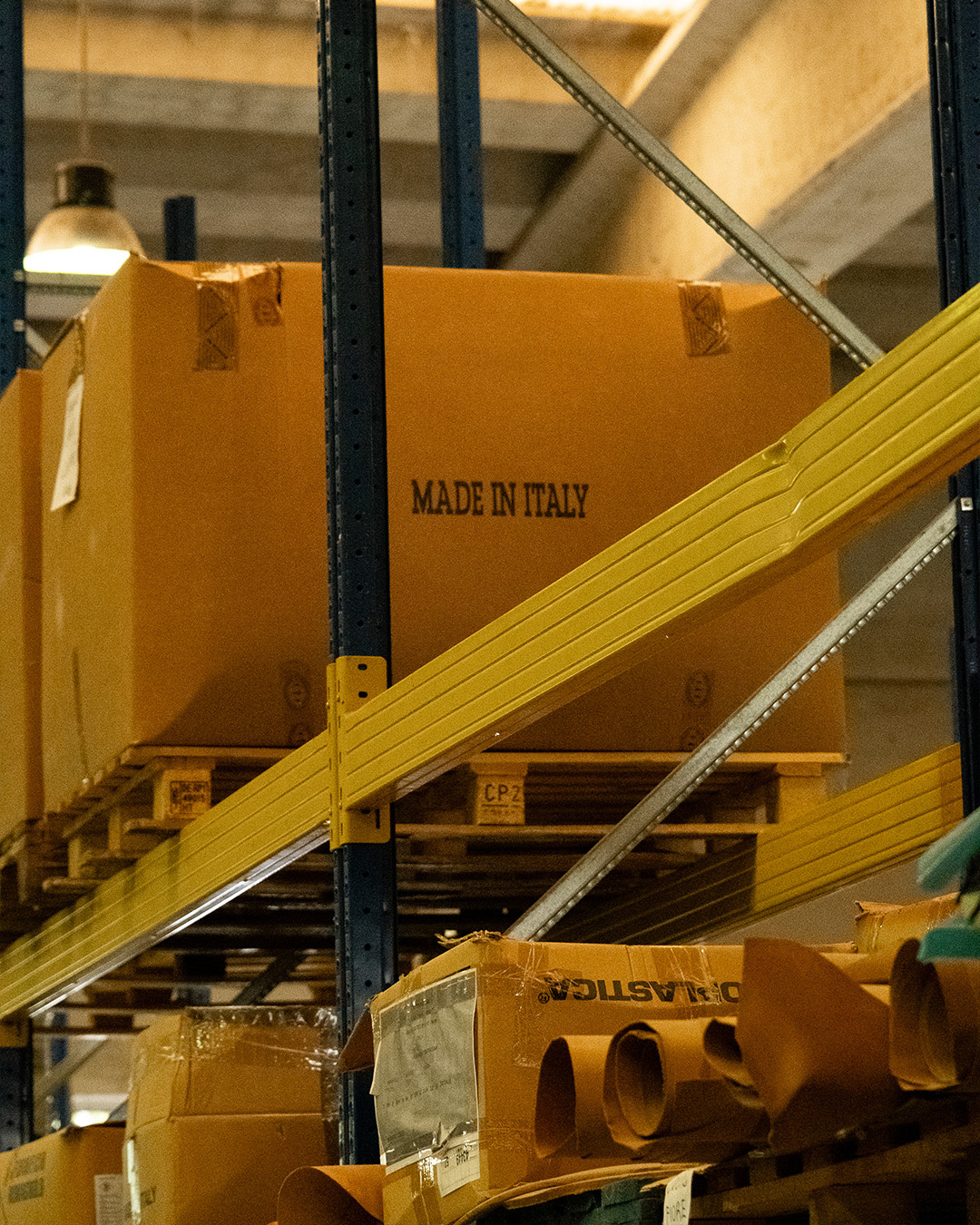
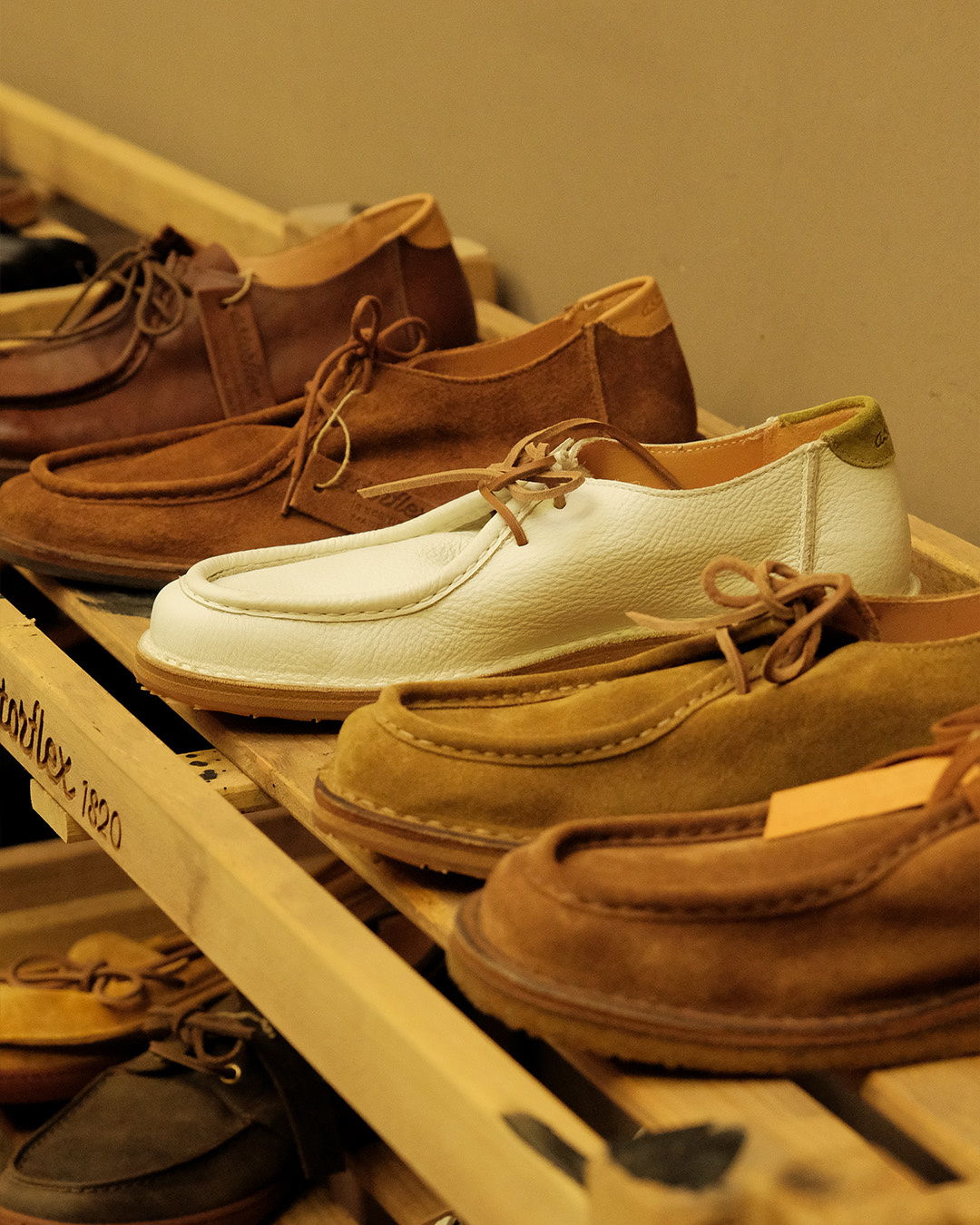
The concept of Made in Italy is often associated with quality, craftsmanship, and tradition. However, for Astorflex, it’s not primarily about national pride, but about something much more concrete: the ability to monitor and control the entire manufacturing process.
– We have the entire process right here, from cutting and sewing to assembly. And all of our suppliers are Italian. That’s what Made in Italy means to us.
Keeping production close is also a way to conserve resources. When something goes wrong, it can be detected and addressed immediately, rather than having large amounts of materials or finished shoes needing to be discarded.
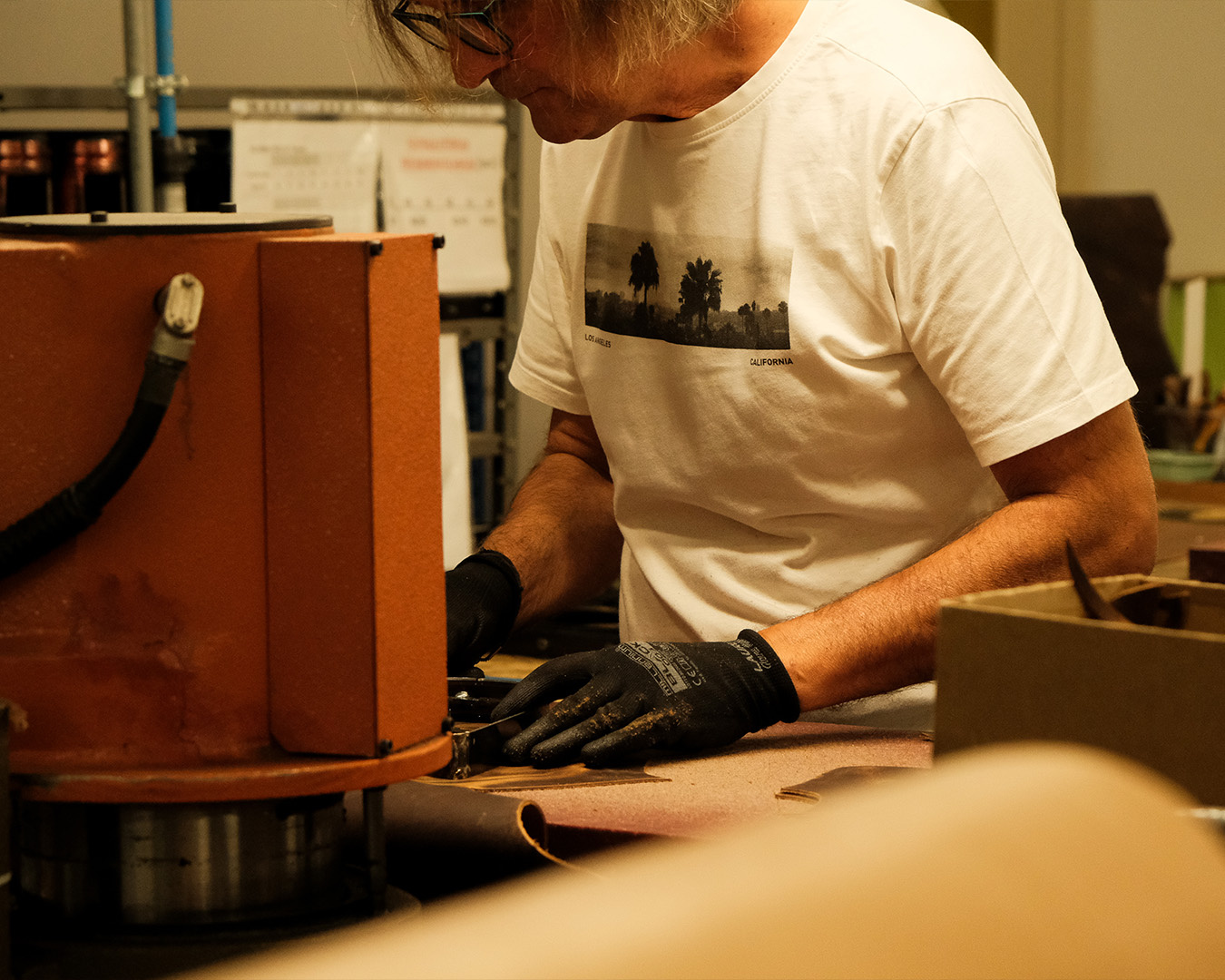
During the tour, it becomes clear how craftsmanship remains at the center, even though modern technology has taken on an increasingly important role. A robot performs one of the more physically demanding tasks.
For Fabio, modernization is not about replacing craftsmanship, but about facilitating a job that he knows can be physically demanding.
– I did that work myself for eight hours a day, says Fabio. On Saturdays, I delivered shipments, I worked during the day and did the invoices in the evenings. Working at the milling machine for eight hours a day is really incredibly tough on the body. It costs what it costs. Instead of buying a luxury car, we invested the money in this robot.
Passing on the Craft
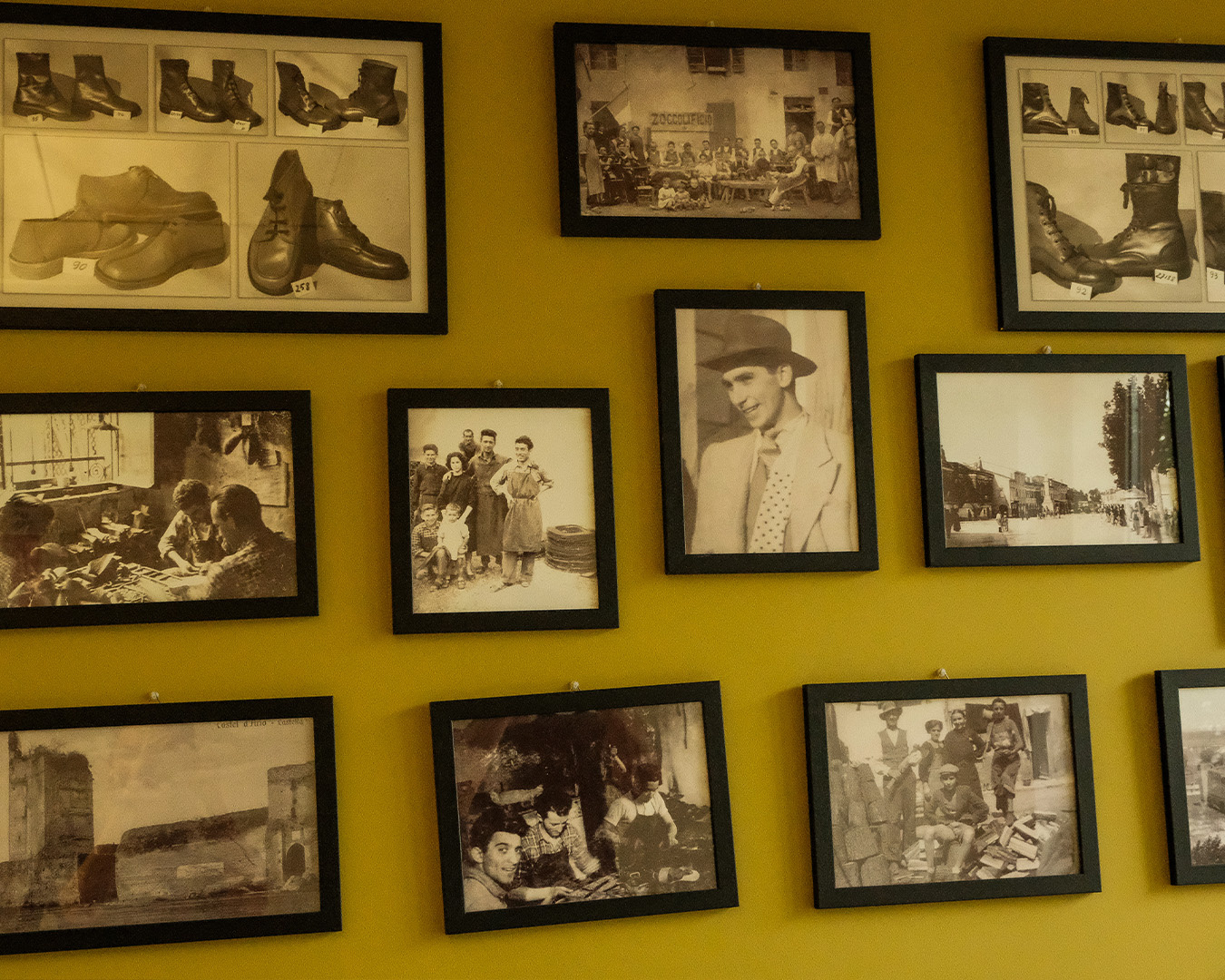
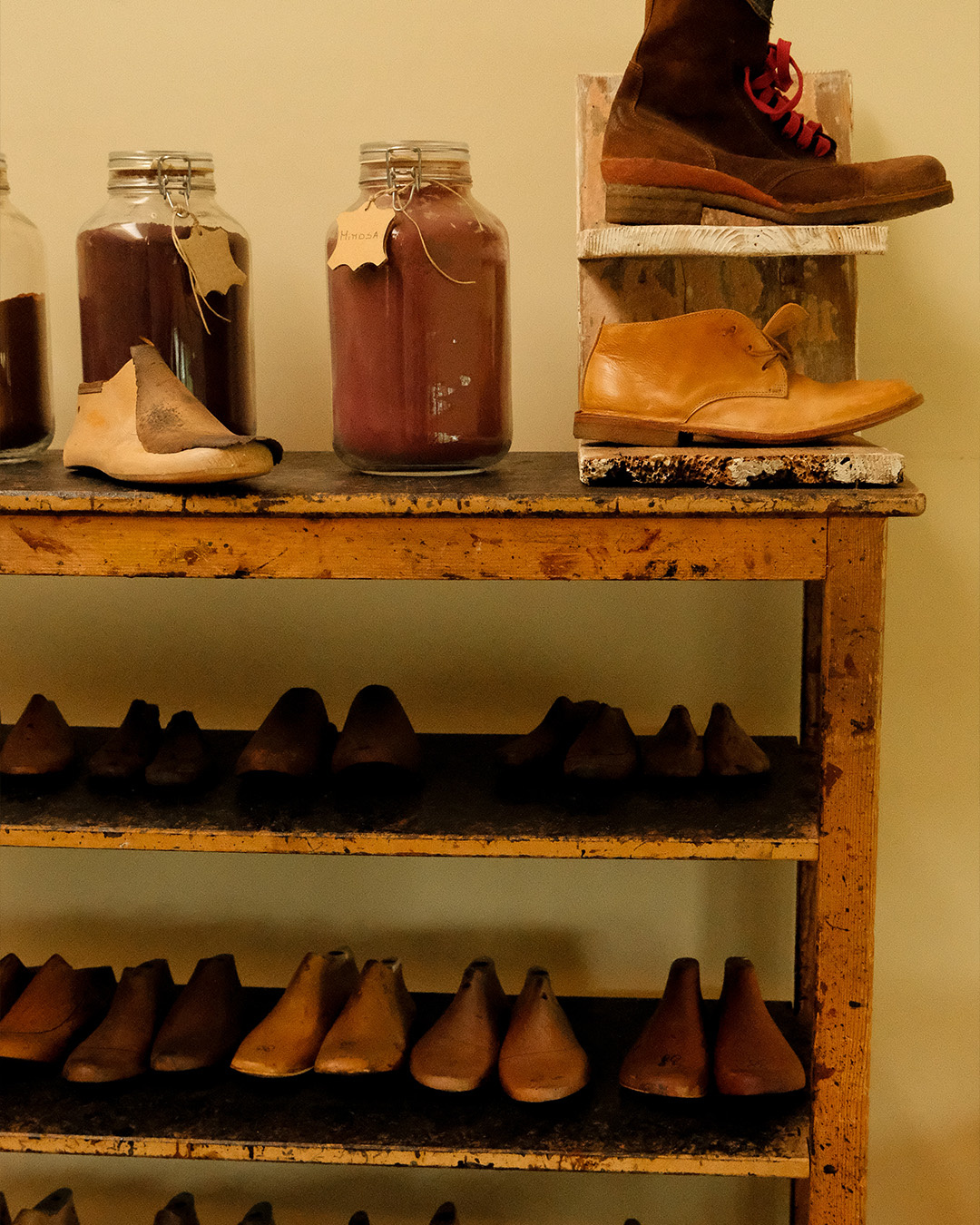
The knowledge passed down from generation to generation remains an essential part of Astorflex's identity.
When we ask Giulio what he has learned from his father that he couldn't learn in school, his answer is not about business strategies or corporate management. Instead, he emphasizes the practical skills that can only be acquired through experience.
– Above all, I have learned to practically handle the problems that arise every day, especially in a manufacturing company where issues are part of the daily routine. It's about not always seeking help from others right away, but first trying to solve the problems myself.
At the same time, Fabio and Giulio are working to develop the factory's workflows, improve the digital systems, and invest in more modern machines. One of their goals is to make shoe manufacturing less physically demanding and more attractive to a younger generation.
From the Factory Floor to the Dining Table
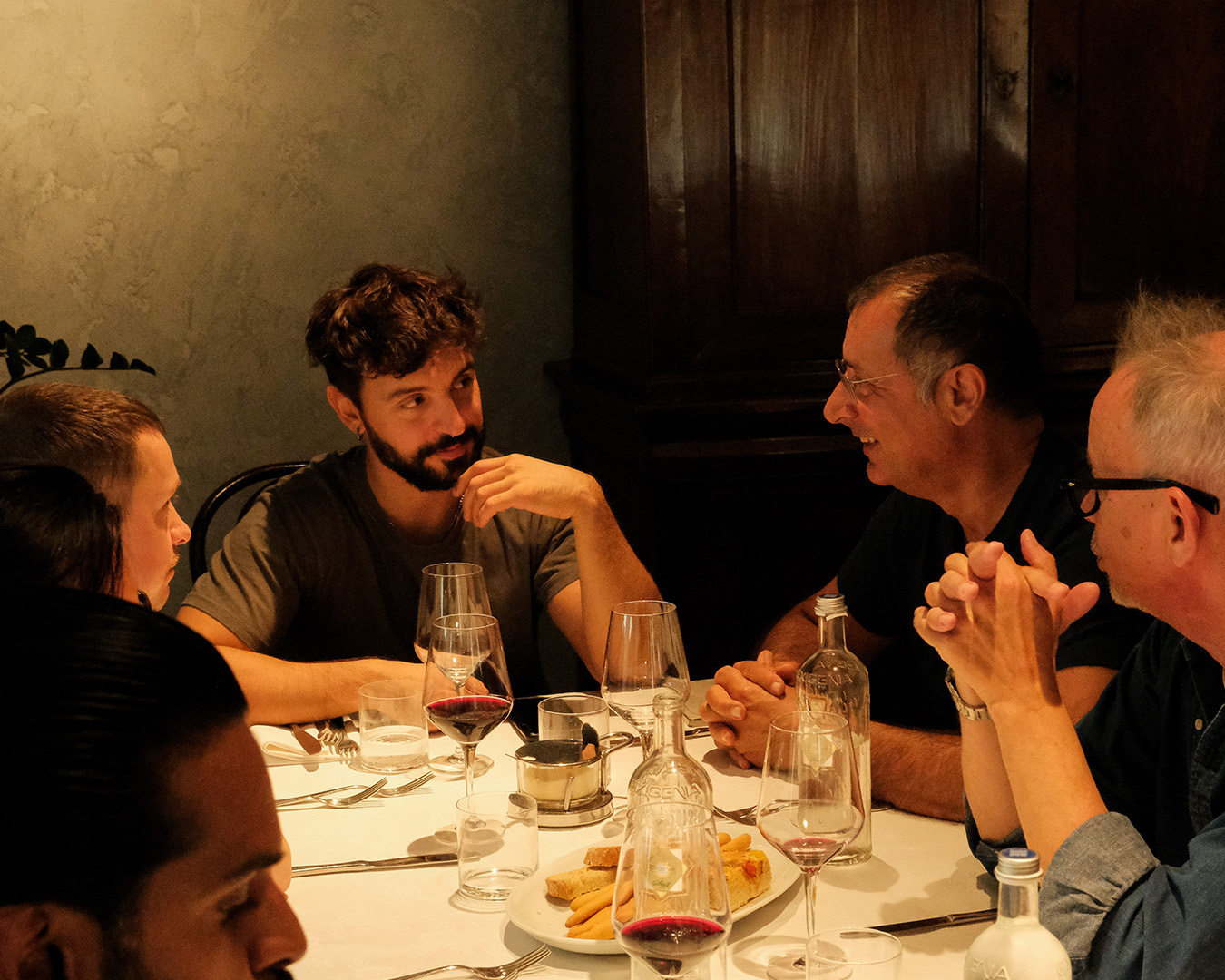
Later that evening, our visit continues at Trattoria Stazione, the family restaurant run by Giulio's brother. Here, a tasting menu featuring local ingredients is served, with a focus on the proximity to producers and what is available for the season.
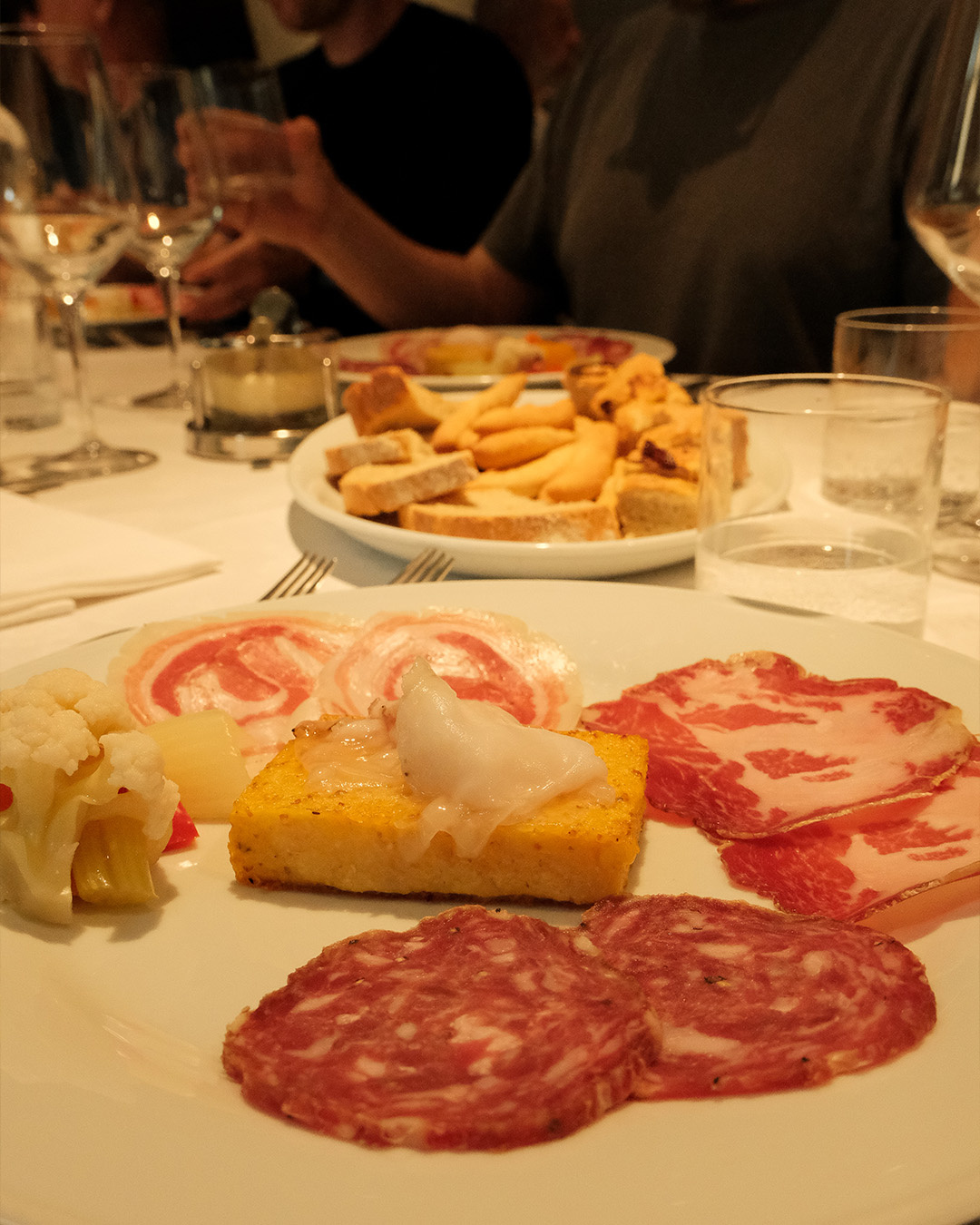
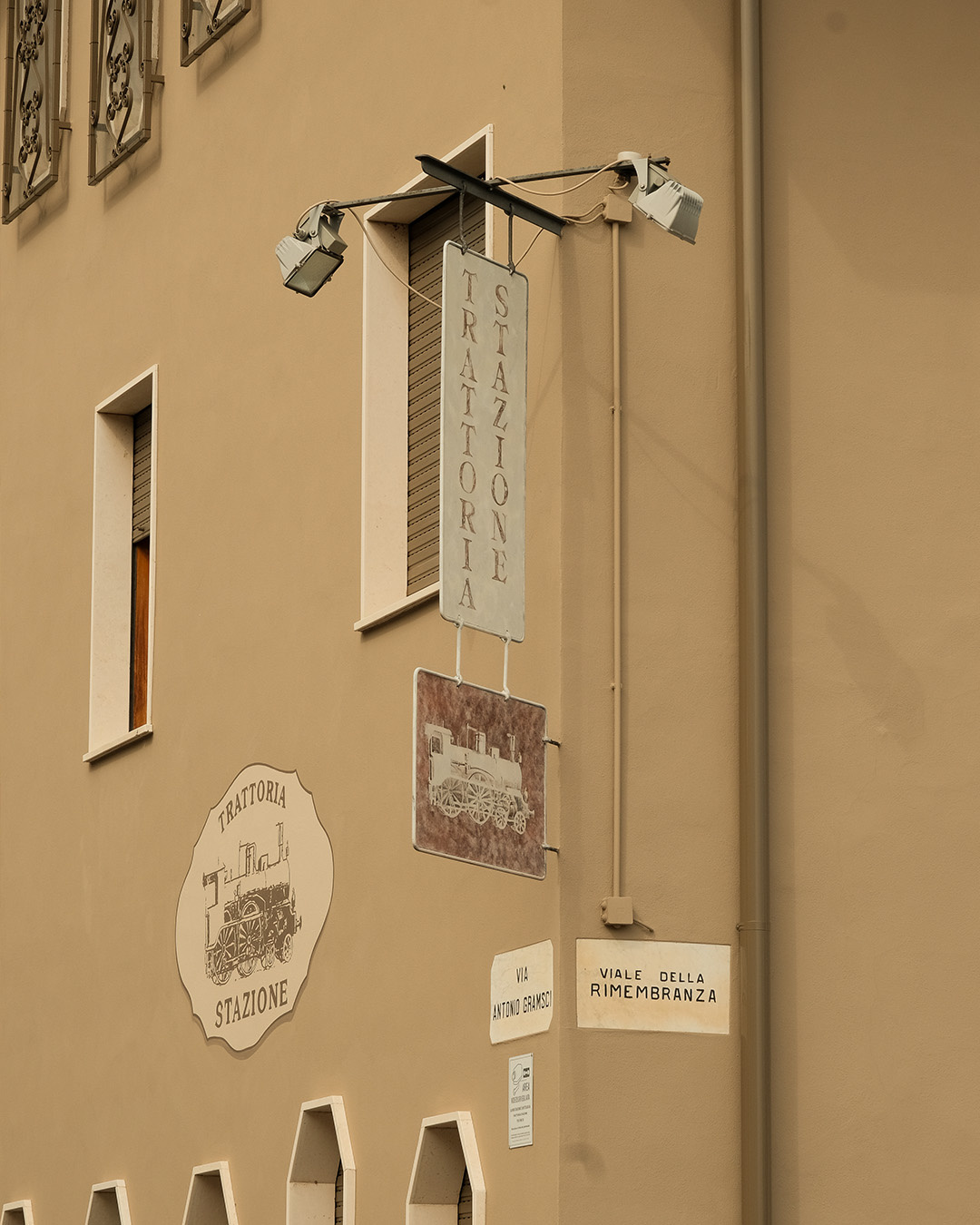
It's hard not to draw parallels to today's factory visits. At the restaurant, it's about making the most of the ingredients, respecting their local origin in the spirit of slow food.
At the factory, the ingredients are replaced by leather, soles, and thread, but the fundamental idea remains the same.
Two different enterprises, united by family, craftsmanship, and the place where everything once began. A desire to preserve something, without standing still in the process.
At the factory, the ingredients are replaced by leather, soles, and thread, but the fundamental idea remains the same.
Two different enterprises, united by family, craftsmanship, and the place where everything once began. A desire to preserve something, without standing still in the process.